

The Black Room
[아츠앤컬쳐] 폼페이 비극이 벌어질 무렵, 폼페이의 한 검은 방 안에서는 사랑과 예언에 대한 이야기가 벌어지고 있었다. 최근 레기오 IX의 인술라 10에서 발굴된 연회장은 호메로스 신화의 화려함이 더욱 돋보이도록 벽면이 어둡게 되어 있었다. 오늘날 ‘검은 방’으로 알려진 이곳의 검은 벽 위로 헬레네, 카산드라, 파리스, 아폴로 같은 인물들의 모습이 드러났다. 검은 벽 배경은 등잔불의 그을음을 가리기 위한 실용적인 이유로 선택되었다. 해가 진 후, 사람들은 등불에 비춰 마치 살아 움직이는 듯한 신화 속 그림을 바라보며 식사했다.
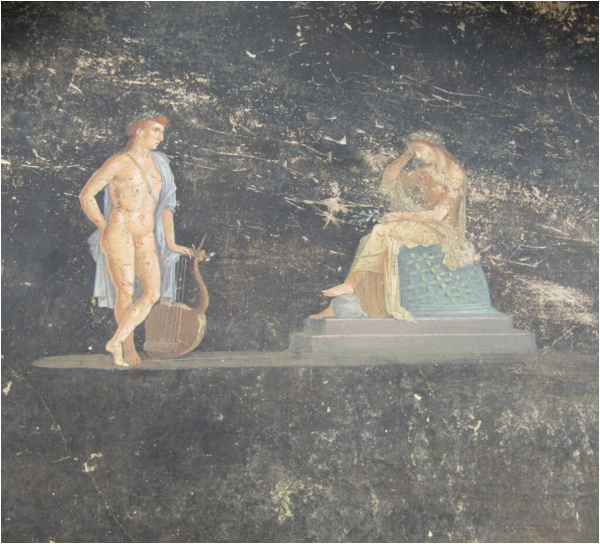
고고학자 가브리엘 주흐트리겔은 설명했다. “신화 속 인물들은 사람들이 사랑 이야기에 국한되지 않고, 과거와 삶에 대해 이야기를 풀어가는 계기가 된다. 그들은 개인과 운명의 관계를 탐구했다.” 고뇌에 시달리는 카산드라는 진실이 개인적 고통으로 변모한 모습과 권력을 뒤흔드는 여성의 지성을 보여준다(Figure 1). 그녀는 아폴로의 구애를 거절하는데, 이후 신은 그녀에게 예언의 능력을 주면서 동시에 아무도 그녀를 믿어주지 않을 것이라는 저주를 내렸다.
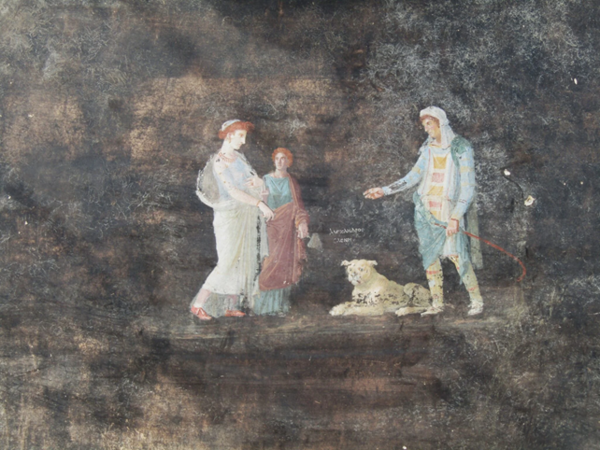
카산드라 곁으로 헬레네와 파리스가 서 있다. 카산드라는 내적 고통을, 헬레네는 운명적인 아름다움을 상징한다. 파리스는 그의 두 번째 이름인 알렉산드로스(남성을 보호하는 자)로 지칭하는 그리스어 비문과 함께하며, 역사적 대재앙에서 인간의 책임을 강조한다(Figure 2). 또한, 사랑 거부로 지나친 예언 능력의 벌을 받은 카산드라와, 신의 선물인 아름다움으로 시대를 불태운 헬레네의 관점은 신의 의지 앞에서 인간의 나약함과 선택의 결과에 대한 성찰의 장이 되었다.
로마 엘리트에게 연회는 단순한 즐거움 이상이었다. 이는 신중하게 연출된 권력과 문화의 퍼포먼스였다. 말과 지식은 혼란스럽고 잔혹한 세상을 이해하는 주요 수단이 되었다. ‘검은 방’으로의 초대는 오래 기억될 경험을 선사한다. 성대한 만찬과 프레스코화의 아름다움은 대화를 풍요롭게 하며, 사회적·정치적 토론의 장이 되었다. 여기에서 신화는 사람들을 연결하는 도구였다. 우아한 분위기 속에서 카산드라의 운명이나 헬레네와 파리스의 비극적 관계를 두고 의무, 삶의 덧없음, 운명 같은 보편적 주제를 다루었다. 트로이 전쟁을 벽화 소재로 선택한 것은, 로마인의 기원이 트로이 난민이라 자부하기 때문이며, 이를 되뇌는 것은 그들의 정체성에 대한 성찰이었다.
디지털 이전의 시대에 오락은 순수한 지적 참여였다. ‘검은 방’은 만찬을 심오한 철학적·정치적 성찰의 시간으로 전환시켰다. 오늘날은 그 신화 가득한 침묵이 요원하다. 우리는 기술이 장벽을 허물고 끝없이 연결된 시대에 살지만, 역설적으로 새로운 형태의 소통 불모지를 만들어냈다. 폼페이의 사람들이 프레스코화를 비추는 등불 아래 운명을 성찰했다면, 우리는 종종 차가운 화면의 빛으로 대면 없이, 사려 깊은 대화보다 빠른 시각적 소비를 선호한다. 디지털 방해 요소는 우리의 만남을 단편적인 독백으로 전락시키고 의미 있는 대화의 도구들을 빼앗아간다. 클릭 한 번으로 세상을 얻지만, 어쩌면 검은 방에 머물며 진정으로 중요한 사랑, 진실, 그리고 자신의 운명에 맞설 용기에 대해 이야기할 능력을 잃어가는지도 모른다.
결국 그 방의 잿더미 속에서 드러나는 교훈은 냉혹하다. 빛을 꺼뜨리는 것은 어둠이 아니라, 세상이 비극으로 치닫는 동안 의미 있는 말을 찾아내지 못하는 무능력이다. 아름다움이 신의 선물이라면, 시간의 그림자 속으로 스러지지 않으려는 심도 있는 노력만이 우리에게 남은 유일한 선택이다.
The Black Room
While the world outside was heading toward tragedy, people inside a black room in Pompeii talked about love and prophecy. Recent excavations in Insula 10 of Regio IX uncovered a banqueting hall with dark walls meant to make Homeric myths stand out. Characters like Helen, Cassandra, Paris, and Apollo emerged from the black background, filling what is now called the “Black Room.”
The choice of black served a practical purpose: it hid the soot from oil lamps that would have marked the walls and frescoes during evening gatherings. The room was used at night, when guests could dine while looking at painted scenes that flickered in the lamplight, almost bringing the myths to life.
Archaeologist Gabriel Zuchtriegel notes, “mythological couples were prompts for discussing the past and life itself, only seemingly limited to love stories. In reality, they explored the relationship between the individual and destiny.” Cassandra, a figure plagued by torment, embodies truth that becomes a personal burden, showcasing female intellect that unsettles power. In these depictions, she rejects Apollo’s advances (Figure 1). He grants her the gift of prophecy, but cruelly curses her to never be believed.
Alongside Cassandra’s story of unheard truth is the tale of Helen and Paris. If Cassandra represents deep suffering, Helen symbolizes beauty that becomes destiny. In the fresco, their meeting includes a Greek inscription that identifies Paris as Alexandros (“protector of men”), subtly stressing human responsibility for history’s greatest tragedies (Figure 2).
Seeing these figures together in the same room offered guests a dual reflection. One side showed Cassandra, punished for her truthfulness. The other side showed Helen, whose beauty, whether a gift or curse from the gods, ignites an entire era. In both examples, the banquet became a meditation on human fragility, divine will, and the impact of choices.
For the Roman elite, the banquet (convivium) was more than indulgence; it was a deliberate display of power and culture. Speech and knowledge took center stage, becoming the main way to make sense of a chaotic and cruel world. Inviting guests into the “Black Room” meant creating a memorable experience: the host provided not only fine food but also an atmosphere where the frescoes enhanced the conversation. Food and wine became pathways for social and political discussions.
In such spaces, myth served as a way to connect. Talking about Cassandra’s fate or the tragic link between Helen and Paris allowed guests to explore universal themes like duty, life’s fragility, and Figure 2 - Elena and Paride fate, all within an elegant setting. The focus on subjects from the Trojan War was no accident: Romans proudly traced their roots to Trojan refugees, and reflecting on those stories mirrored their own identity.
In a time without digital distractions, entertainment relied on intellectual engagement. The “Black Room,” with figures emerging from darkness, sparked thought, turning a private dinner into a moment of deep philosophical and political reflection.
Today, that silence filled with myth feels increasingly far away. We live in a time of constant hyperconnectivity where technology, despite breaking down barriers, has oddly created a new kind of communicative emptiness. While Pompeian diners reflected on destiny with the warm glow of lamplight, we often respond to cold screens to dodge confrontation, favoring quick visual consumption over thoughtful dialogue.
Digital distractions risk turning our gatherings into fragmented soliloquies. They strip away the tools that once made conversation an art. We have gained instant access to information, yet we are losing the ability to be present in a room, whether black or dark, and talk about what truly matters: love, truth, and courage in facing one’s fate.
Ultimately, the lesson emerging from the ashes of that room is clear and unwavering: it is not darkness that snuffs out a people’s light, but the failure to express something meaningful while the world races toward tragedy.
If beauty is a gift from the gods, depth is our only choice if we are to avoid fading into mere shadows of time.

글 ㅣ 레티지아 데 투리스 Letizia De Turris
이탈리아 살렌토대학교 역사 전공 석사. 고고학 연구원. 이탈리아 레체의 카발리노(2011) 및 로카(2013), 카를로 5세 성(2015) 발굴. 한양대학교 한국어(2023), 동국대학교(2025) 한국어 고급 과정.