

The Art of Italian Hand Gestures
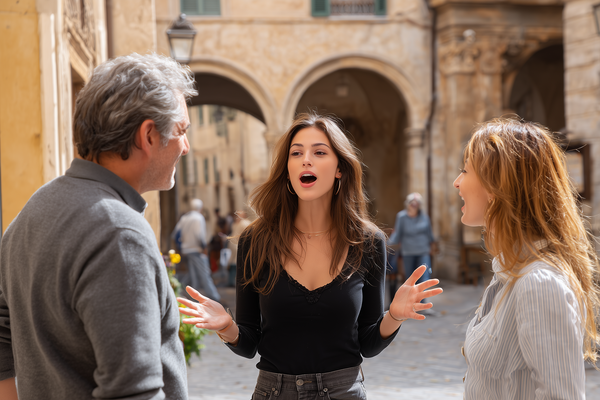
[아츠앤컬쳐] 이탈리아 친구들과 대화를 나누던 중, 한 친구가 이렇게 물은 적이 있다. “이탈리아인을 조용히 시키는 방법이 뭔지 알아?” 나는 고개를 저었다. 그러자 그녀가 답했다. “손을 묶으면 돼. 마음껏 움직이지 못하게 말이야.” 농담처럼 들리지만, 꽤 그럴듯한 이야기다.
이탈리아인들은 열정적이고 문화적으로 표현력이 풍부한 의사 소통 방식으로 잘 알려져 있다. 그들은 손동작을 목소리의 지적 연장선처럼 활용해 말을 강조하고, 보완하며, 때로는 말 자체를 대신한다. 손동작은 단순한 제스처를 넘어, 말에 중요한 의미의 층위를 더하는 필수 핵심 요소다.

여러 이탈리아 손동작은 현대 이탈리아어보다 훨씬 오래된 것으로 보인다. 고대 로마와 그리스 시대, 그리고 지역 간 언어 장벽을 넘기 위한 필요 속에서 발전해왔다. 방언과 외래 문화가 뒤섞여 언어가 통일되기 전, 손동작은 분절된 의사소통을 이어주는 공통의 ‘코드’이자, 붐비고 소란스러운 공간에서도 멀리서 주의를 끌 수 있는 실용적인 소통의 다리였다. 표준 이탈리아어가 정착된 오늘날에도, 손동작은 여전히 이탈리아식 소통의 핵심으로 살아 있다.
이탈리아 손동작 문화는 “한 번의 제스처가 천 마디 말보다 낫다(un gesto vale più di mille parole)”는 생각을 잘 보여준다. 예를 들어 “Che vuoi?”(뭘 원하는 거야?)라는 말은 손가락을 모아 위로 세운 채 위아래로 움직이면, 말투에 따라 혼란, 짜증, 혹은 단순한 호기심을 표현할 수 있다. 또 “나도 몰라”, “어쩔 수 없어”라는 뜻은 어깨를 으쓱하며 손바닥을 위로 펼치고 “보(boh)”라는 소리를 더하면, 더 이상 알 방법이 없다는 뜻이 단번에 완벽하게 전달된다.
1958년에 처음 출간된 『이탈리아어 말하기: 제스처의 예술(Speak Italian: The Fine Art of the Gesture)』은 원래 이탈리아 사전에 부록으로 실린 손동작 해설서로, 이탈리아 특유의 비언어적 표현과 그 미묘한 뉘앙스를 풀어내어 이해를 돕기 위한 안내서이다. 말과 손동작이 자연스럽게 어우러지는 이 소통 방식은 전 세계에 알려졌고, 20개 지역의 방언 차이에도 불구하고 이탈리아인들은 일상에서 약 250가지의 손동작을 사용하는 것으로 추산된다.
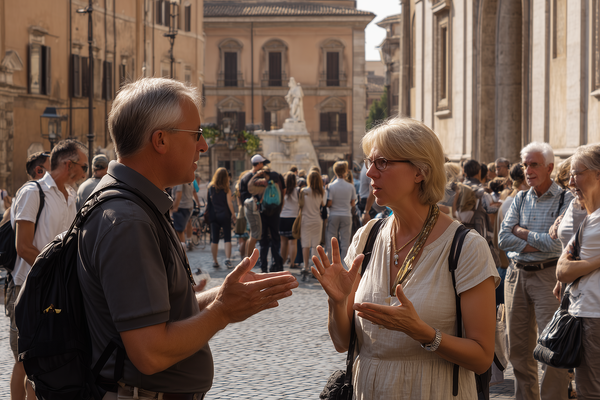
이제 손동작은 하나의 ‘병행 언어’가 되었다. 대표적인 예를 들면, 맛있는 음식을 먹었을 때는 검지를 뺨에 대고 비트는 동작으로 감탄을 표현한다. 또 “정말 많이”, “대단히”라는 뜻을 전하고 싶을 때—예를 들어 베네치아가 얼마나 아름다운지 묻는 질문에—손으로 공중에 원을 그리면 충분하다. 그 한 동작만으로도 베네치아의 아름다움이 전해진다.
이탈리아 손동작을 배우는 방법은 다양하지만, 같은 제스처라도 지역에 따라 의미가 달라질 수 있다. 예를 들어, 턱 아래에서 손등을 바깥으로 튕기는 ‘턱 튕기기’ 동작은 남부 이탈리아에서는 “상관없어” 또는 “아니야”라는 뜻이지만, 북부에서는 “꺼져” 또는 “저리 가”라는 뜻이다. 관자놀이를 검지로 톡톡 두드리는 제스처 역시 칼라브리아에서는 애정 섞인 “미쳤어?” 또는 “정신 나갔어!”라는 뜻인 반면, 북부에서는 가볍게 두드리면 “똑똑하네”, 세게 두드리면 “미쳤어!”라는 의미가 된다.
마지막으로, 함께 해보자. 한 손의 손가락 끝을 모두 모아 입술에 대고 살짝 키스한 뒤, 미소를 지으며 바깥으로 펼쳐 보라. 그것은 “모든 게 완벽해!”라는 이탈리아식 최고의 찬사다.

The Art of Italian Hand Gestures
In the middle of Italian friends having a conversation, one friend once asked me: ”Do you know how to make an Italian stop talking?” I shook my head, no idea. Her reply: ”Tie his hands, to prevent them from moving freely.” This technique seems to work. Italians are famous for their passionate and culturally expressive way of communicating, using hand gestures as an intellectual extension of their voices to add, emphasis, and replace words. The gestures are essential to the way they convey their messages verbally, adding important layers of meaning to spoken words.
Many Italian hand gestures are probably older than the modern Italian language itself, evolving from ancient Roman, Greek, and regional needs for cross-language communication. The hand gestures became vital during periods when diverse dialects and foreign influences made spoken Italian fragmented before its standardisation. They served as a necessary common ground code, a practical purpose, and ”a bridge” to communicate in crowded, noisy places, attracting attention even from a distance. The usage continues today as an essential part of the Italian way to communicate, even after the formal Italian language has been formed.

The Italian hand gesture culture shows the idea that ”un gesto vale più di mille parole” (a gesture is worth more than a thousand words). With a sentence like ”Che vuoi?” (What do you want?), using hand gesture: fingers put together, pointing up, then moving up and down, expressing confusion, impatience, or just curiosity, depending on the tone of the voice. Another example to convey the message: ”I don’t know,” or ”there’s nothing I can do about it.”, using a gesture: shrug your shoulders and open your arms with palms up, add the sound ”boh”, it’s perfect to show fast that there’s nothing you can do to know more.
The Italian gesture book, first published in 1958, with the title <Speak Italian: The Fine Art of the Gesture>, originally released as a supplement to an Italian dictionary to decode the nation's expressive hand signals, explaining the nuances of Italian nonverbal communication, and offering a guide to understand. These expressions of voices and the use of hands naturally during conversations have become known worldwide, and it’s estimated that Italians have about 250 gestures in their daily conversations, despite the dialect differences of the 20 various regions.
The gestures have become a parallel language; some famous Italian gestures might help you to understand when communicating with them: every time you eat something good, the way you show your appreciation is by using a hand gesture: take your index finger to your cheek and twist it. If you would like to simply say “so much” for giving your opinion, for example, someone asks you how beautiful Venice is, the hand gesture is to make a circle with your hand up in the air. This is enough to show that Venice is very beautiful.
There are some practical ways to learn how to communicate in Italian with hand gestures, however, some of the same gestures can carry different meanings across regions in Italy. For instance, the chin flick is a gesture when you flick the back of your fingers outwards from under your chin, in Southern Italy, it means ”I don't care,” or ”no”; while in the North, it means ”get lost” or ”go away”. The temple tap gesture, when you tap the index finger to the temple head, in Calabria, affectionately means ”are you crazy?” or ”you are mad!”. While in Northern Italy,” you’re smart/genius” (with a gentle tap) or ”crazy!” (with a stronger tap).
Let us do this together: bring all our fingertips using one hand to our lips, kiss them toghter, then open our hands outwards with a smile to express that everything is absolutely perfect!

글 ㅣ Maureen Siwy
Culinary and social traditions researcher