

Vino Nobile di Montepulciano
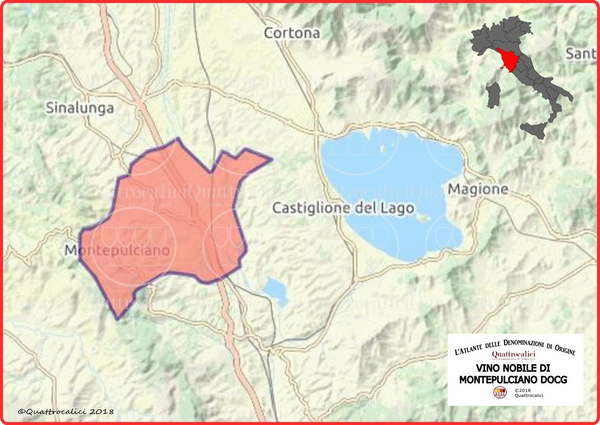
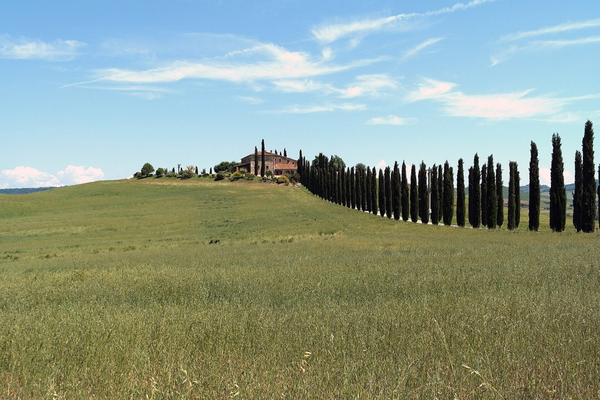
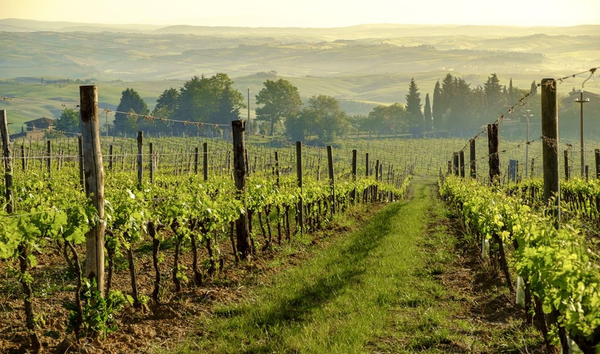
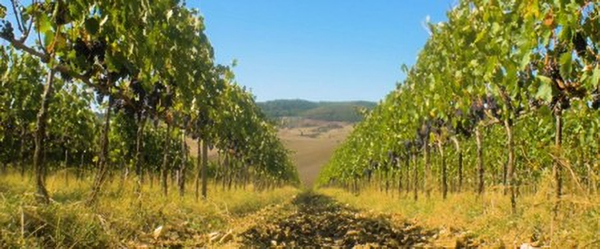
[아츠앤컬쳐] 토스카나의 중심부, 발 디 키아나와 발 도르차의 완만한 언덕 사이에는 르네상스 거장들이 그려 놓은 듯한 풍경이 펼쳐진다. 중세 도시 시에나에서 차로 조금만 이동하면, 몬테풀치아노라는 마을이 석회암 능선 위에 자리 잡고 있다. 이곳에서는 포도밭과 사이프러스 가로수가 늘어선 길들이 한눈에 내려다보이며, 인간과 자연이 오랜 세월 변함없이 조화를 이루어 온 아름다운 들판이 펼쳐진다. 몬테풀치아노는 이탈리아에서 가장 명망 높은 레드와인 가운데 하나인 비노 노빌레의 탄생지이기도 하다.
토스카나 지역의 포도 재배 역사는 고대까지 거슬러 올라간다. 1868년 몬테풀치아노 인근의 에트루리아 무덤에서 와인 잔인 킬릭스(kylix)가 발견된 사실이 이를 증명해 준다. 그러나 이 와인의 명성이 전설처럼 널리 퍼지기 시작한 것은 근대에 들어서, 특히 15세기와 16세기에 이르러서였다. 강력한 메디치 가문의 일원이자 1469년부터 1492년 사망할 때까지 피렌체 공화국을 통치했던 로렌초 데 메디치는 몬테풀치아노 와인을 “노빌레”, 즉 “귀족적인 와인”이라고 처음으로 언급한 인물로 여겨진다. 그는 이 와인이 토스카나의 은행가, 상인, 정치가 등 엘리트 계층의 취향에 어울리는 와인이라고 생각했다.
16세기 중엽에는 교황 바오로 3세(Paul III, 본명 알레산드로 파르네세)의 신뢰받는 와인 관리인이자 역사상 최초의 근대적 소믈리에로 평가되는 산테 란체리오(Sante Lancerio)가 몬테풀치아노 와인을 극찬했다. 그는 이 와인을 “겨울에도 여름에도 완벽하며, 향기가 풍부하고, 바디감이 있으면서도 거칠지 않은, 신사들을 위한 와인”이라고 묘사했다.
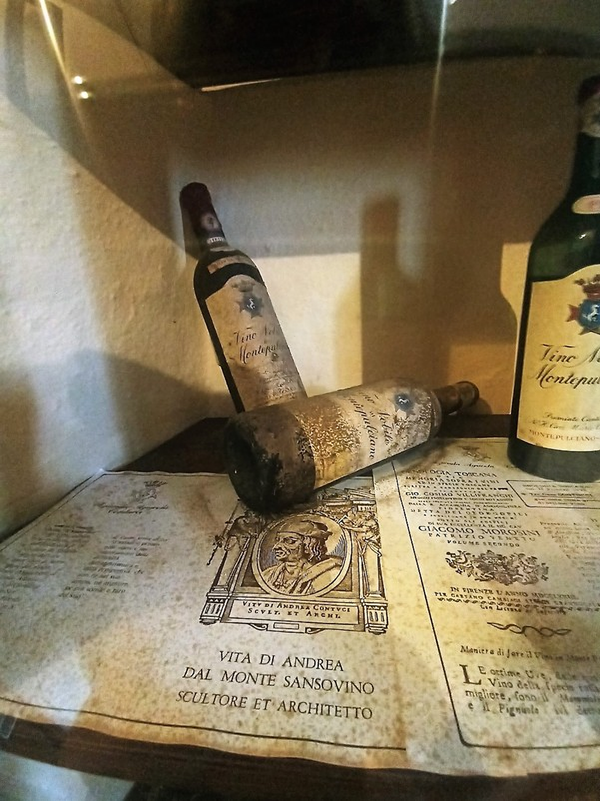
하지만, “비노 노빌레”라는 명칭이 문서에 처음 등장하는 기록은 1787년 9월의 회계 문서로, 몬테풀치아노에서 피렌체 콘세르바토리오로 ‘비노 노빌레 28병’이 배송되었다는 내용이 남아 있다. 또 다른 가설에 따르면, 이 이름은 주로 토스카나의 귀족 가문들이 자신들의 영지에 있는 포도밭에서 이 와인을 생산했기 때문에 붙여졌다고도 한다.
어느 쪽이든 역사적으로 많은 인물들이 이 와인을 사랑했다. 교황 바오로 3세, 합스부르크 황제 카를 5세, 프랑스 왕비 카트린 드 메디치, 오스트리아 황제 카를 6세, 그리고 미국의 토머스 제퍼슨 등이 그 대표적인 애호가였다. 또한 이 와인은 알렉상드르 뒤마의 『몽테크리스토 백작』과 볼테르의 『캉디드』와 같은 프랑스 문학 작품에서도 언급되어 있다.
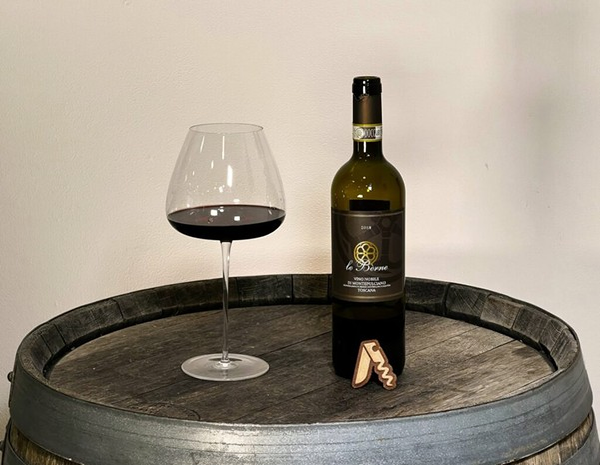
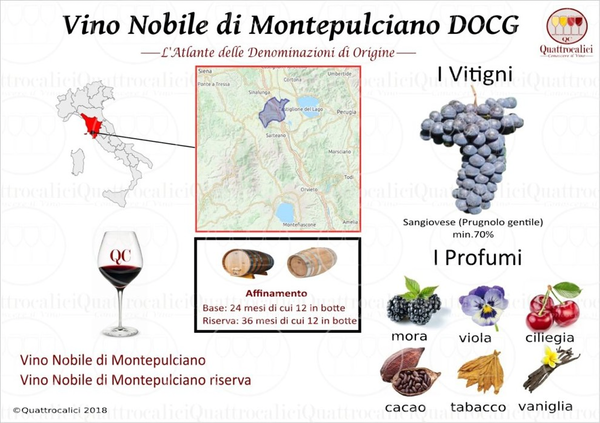
비노 노빌레 디 몬테풀치아노 DOCG는 숙성에 따라 루비색에서 점차 가넷색으로 변하는 우아한 레드와인이다. 이 와인은 최소 70%의 산지오베제 품종을 사용하고, 나머지는 카나이올로와 맘몰로 포도로 블렌딩하여 만든다. 향은 복합적이고 강렬하며, 체리·자두·블랙체리·라즈베리와 같은 과일 향에 더해 제비꽃의 은은한 꽃 향, 그리고 바닐라·토스티드 커피·블랙페퍼·향초 등 스파이스의 뉘앙스가 어우러진다.
맛은 바디감이 풍부한 드라이 와인의 전형적인 특징을 지니며, 비교적 분명한 탄닌이 느껴진다. 이러한 탄닌은 대형 오크통이나 바리크에서의 장기 숙성을 통해 부드러워지며, 그 결과 와인은 균형 잡히고 매끄러운 질감을 갖고 있다.
Vino Nobile di Montepulciano
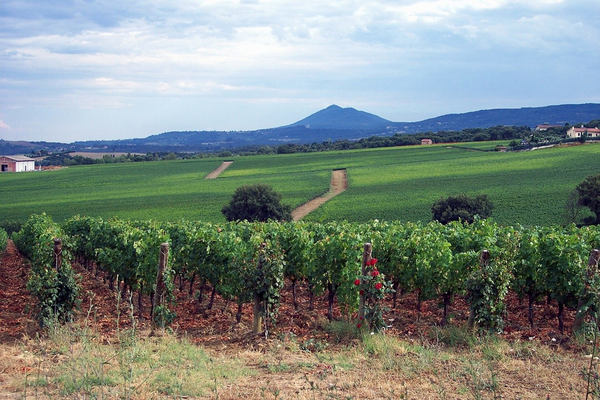
In the heart of Tuscany, between the rolling hills of the Val di Chiana and the Val d’Orcia, lies a landscape that seems painted by the masters of the Renaissance. Just a short drive from the medieval majesty of Siena, the town of Montepulciano sits perched on a limestone ridge, overlooking expanses of vineyards and cypress-lined avenues, in a land of timeless beauty where the harmony between man and nature has remained unchanged for centuries. Montepulciano is the birthplace of Vino Nobile one of Italy’s most prestigious red wines.
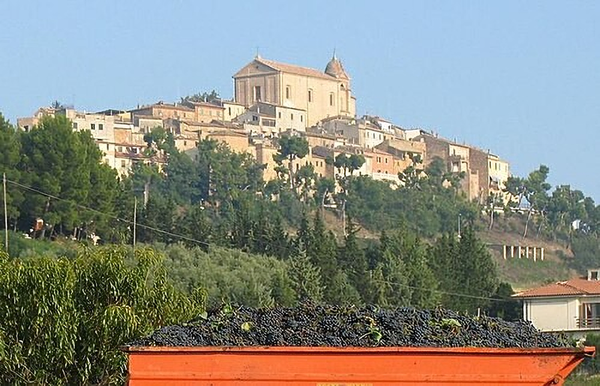
Viticulture in this part of Tuscany dates back to ancient times as evidenced by the discovery of a kylix, a wine cup, in 1868 in an Etruscan tomb near the very town of Montepulciano, but it is only in modern times, in the fifteenth and the sixteenth century, that the reputation of this wine begins to become legendary. Lorenzo de’ Medici, member of the powerful House of Medici and ruler of the Republic of Florence from 1469 to his death in 1492, may have been the first to refer to Montepulciano wine as “nobile”, “noble”, believing it to be a wine suited to the tastes of the elite of Tuscan bankers, merchant and politicians.
Around the mid-sixteenth century Sante Lancerio, considered the first modern sommelier and trusted cellar master of Pope Paul III (born Alessandro Farnese) from 1534 to 1549, praised Montepulciano wine as “perfect both in winter and in summer, full of aroma, full-bodied but not rustic, therefore it is a wine for gentlemen”.
The first written record of the name “Vino Nobile”, however, is an accounting document from September 1787 relating to the delivery of “28 flasks of Vino Nobile” from Montepulciano to the Conservatory of Florence. In these regards, according to another hypothesis, the name “Vino Nobile” derives from the fact that it was mostly Tuscan aristocratic families who produced it in the vineyards of their estates.
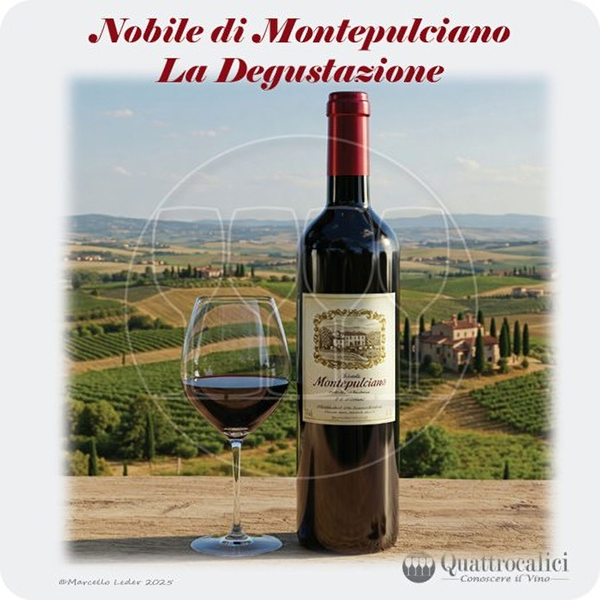
Whatever the truth, several historical figures, such as Pope Paul III, Charles V of Habsburg, Catherine de’ Medici, Charles VI of Austria and Thomas Jefferson greatly appreciated this wine, which is also mentioned in works of French literature, like “The Count of Monte Cristo”, by Alexandre Dumas and “Candide”, by Voltaire.
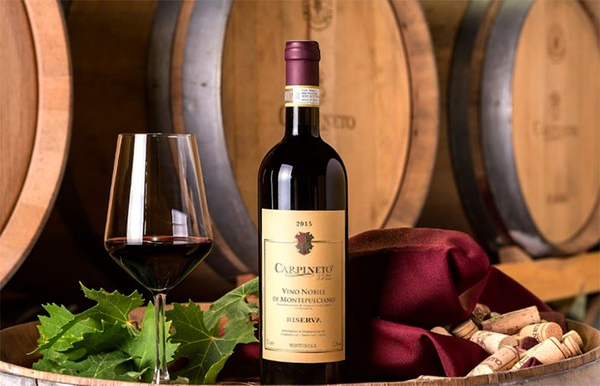
Vino Nobile di Montepulciano DOCG is a refined red wine with a ruby color tending towards garnet when aging. It is made with at least 70% Sangiovese grapes and the remainder with Canaiolo and Mammolo grapes. The aroma is complex, intense, ethereal, with fruity notes of cherry, plum, black cherry, raspberry, along with floral hints of violet and spicy nuances of vanilla, toasted coffee, black pepper and aromatic herbs. The taste is typical of a full-bodied, dry wine, with fairly pronounced tannins, softened by long aging in large barrels or in barriques, which lends balance and smoothness to the palate.

글 | 에밀리아노 펜니지 Emiliano Pennisi
Wine scholar and expert
He attended sommellier courses in Italy
Lecturer of the Italian Cultural Institute in Seoul
Sogang University lecturer of Italian language