

The Carnival of Schignano, one of the oldest in Lombardy
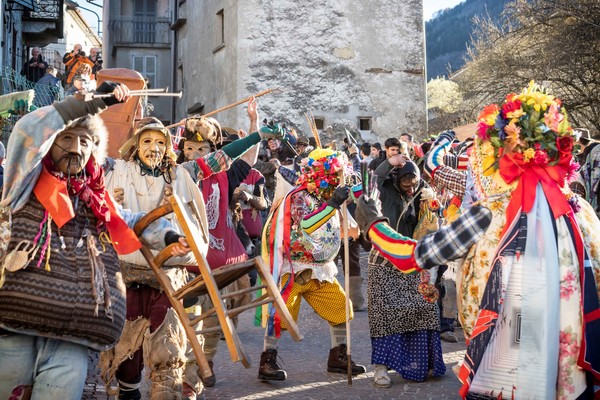
[아츠앤컬쳐] 2월은 이탈리아의 카니발 시즌이다. 그랜드 베네치아 무도회를 비롯해, 비아레죠, 첸토, 푸티냐노 등 전국 각지에서 형형색색의 가면 퍼레이드와 같은 다채로운 축제가 펼쳐진다. 그러나 정말 독특한 축제를 찾고 있다면 스키냐노 카니발에 가 보자!
코모 호수에서 차로 불과 몇 분 거리에 있는 발 딘텔비(Val D'Intelvi) 푸른 계곡에서 펼쳐지는 스키냐노 카니발은 중세에 시작된 이 행사의 옛 성격을 고스란히 간직하고 있으며, 멋들어진 나무 가면이 특징이다. 스키냐노 카니발은 1월과 2월에 사이에 개최되는 다양한 행사들로 이루어져 있다. 이 기간은 먼 나라로 떠났다가 11월 말이 되어서야 집으로 돌아오는 가장이나 이민자들을 성대하게 환영했던 과거 수세기에 걸친 전통 축제가 열리던 시기다.
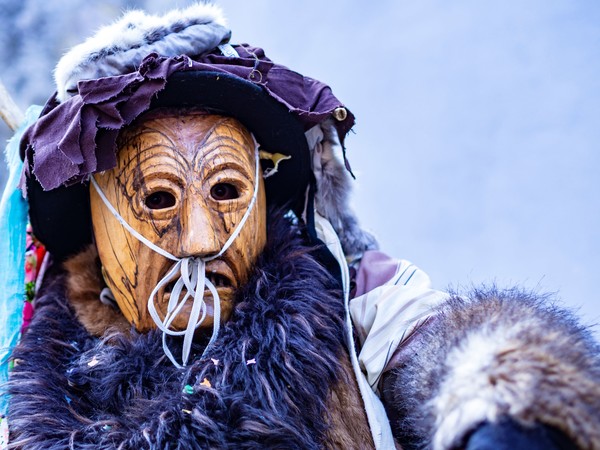
스키냐노 카니발은 1월 5일, 만 18세가 되는 성년을 축하하는 “베제타(VEGETA)” 축제가 끝나자마자 시작된다. 이날 저녁 자정 무렵, 댄스 파티가 절정에 달할 때 미남 캐릭터 “베이Bei”와 추남 캐릭터 ”브루트”들이 도착하여 공식적으로 카니발 축제의 시작을 알린다.
마을의 중앙 광장에 세워지는 카를리세프는 카니발을 상징하는 꼭두각시 인형으로, 사순절 전날 즉 참회의 화요일까지 그 자리에 가만히 있다가 축제가 끝나는 것을 감지하면 도망치려 한다. 이때 “베제타” 축제의 주인공 청년들 중 한 명이 카를리세프 역할을 하면서 골목길로 달아난다. 결국 그는 다른 청년들에게 붙잡혀 중앙 광장으로 이송된다. 그리하여 그는 다시 꼭두각시 인형으로 돌아오게 된다. 카니발이 끝나지 않기를 바랐던 카를리세프는 결국 참회의 화요일 자정에 화형에 처해진다.
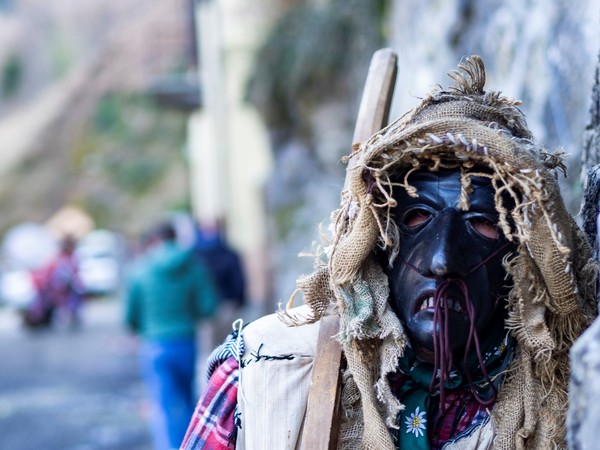
마을 주민들도 공연에 참여하여, 과거 농민의 전형적인 특징을 보여주는 독특한 의상과 나무 가면을 쓰고 며칠동안 거리를 돌아다닌다. 이들 캐릭터들 중에서 우선, 부유한 사람들을 상징하는 미남 캐릭터 “베이(Bei)”, 즉 “마스카룬(Mascarun)”이 있다. 자신의 아름다움과 부를 과시하기 위해 호사스러운 장신구로 치장하고, 사치스럽다 못해 거의 우스꽝스러운 옷을 입고, 꽃, 리본, 깃털로 덮인 모자를 쓴다. 그리고 이민자들을 상징하는 추남 캐릭터 “브루트(Brut)”도 있다. 이들은 바구니, 빗자루, 여행가방 같은 물건들을 가지고 돌아다닌다.
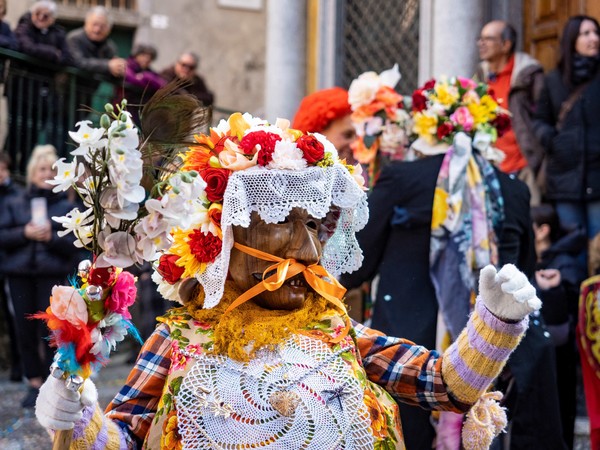
“베이”와 “브루트”는 말을 할 수 없지만 이들이 가지고 다니는 종이 서로 다른 소리를 내기 때문에 군중은 이들을 식별할 수 있다. 생명에 결부된 “베이”는 초원의 가축들이 달고 있던 은방울 소리를 내는 청동 종을 갖고 있는 반면, “브루트”는 둔탁하고 불쾌한 소리를 내는 종을 가지고 있기 때문이다.
스키냐노 카니발은 수백 년 된 전통으로, 퍼레이드 참가를 택한 사람들에게 잊을 수 없는 독특한 경험을 선사할 것이다. 발레 딘텔비 계곡에 위치한 스키냐노는 다채로운 색상과 소리, 다양한 풍미를 가지고 있어 당일치기 여행을 즐기기에 좋은 곳이다.
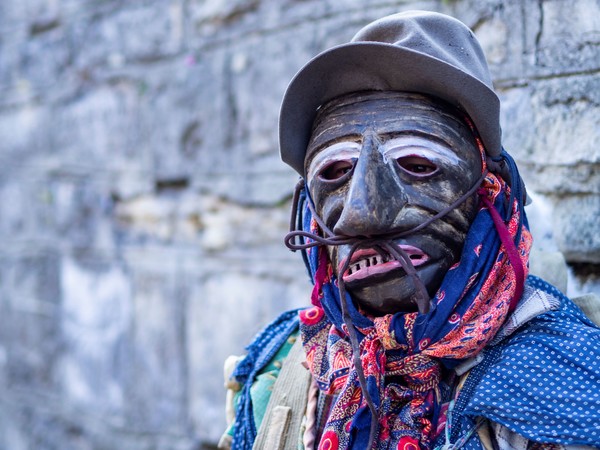
The Carnival of Schignano, one of the oldest in Lombardy
In February, it’s carnival season in Italy. Throughout the nation, a plethora of colorful events take place, such as the grand venetian ball and the parade of colorful masks in Viareggio, Cento, Putignano, and other places. However, if you’re looking for something truly unique, you should check out the Schignano Carnival.
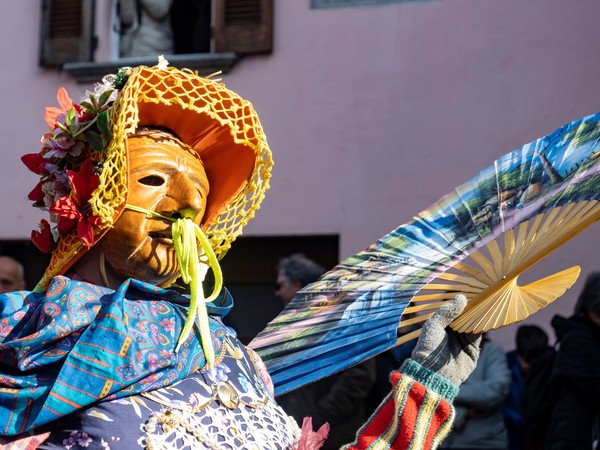
Just a few minutes’ drive from Lake Como, the Schignano Carnival in the green Val D’Intelvi still maintains the ancient character of an event of medieval origins, and is characterized by splendid wooden masks. The Schignano Carnival is divided into various manifestations that take place in several moments between January and February: these periods correspond to the traditional feasts of past centuries, with which the emigrants, the heads of families, destined to leave for distant lands and return home only at the end of November, were greeted in great style.
The Schignano Carnival starts on January 5 as soon as the “Vegeta” ends, the Neo-Eighteen-Year-Olds’ feast, which celebrates their coming of age. That evening, around midnight, at the peak of the dances, the “Bei” and the “Brut” arrive to officially commence the carnival party.
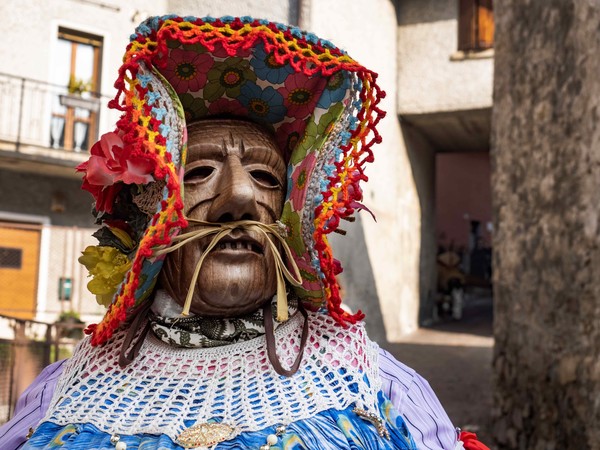
Placed in the village’s main square, the Carlisepp, a puppet symbolizes the carnival, will remain inactive until the final day before Lent, or Mardi Gras, when, sensing the end of the festivities, he will attempt to flee. At this point, one of the young protagonists of the “Vegeta” plays the role of Carlisepp and runs away into the alleys. Eventually, he is captured by other young men and transported to the main square. Thus, he is condemned to return to being a puppet. The Carlisepp, who would like the carnival to never end, ends up being burned at the stake at midnight on Shrove Tuesday.
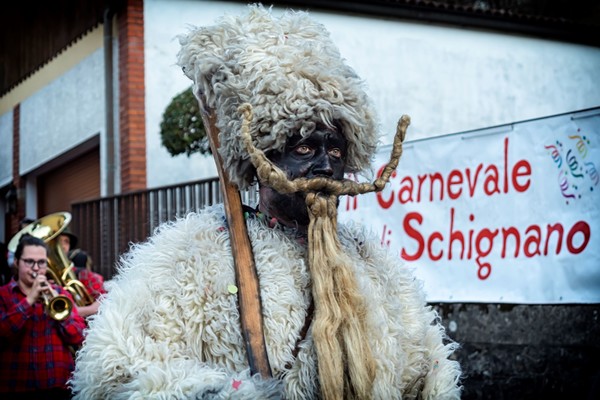
The town’s residents also participate in the performance roaming the streets the days before, wearing unique costumes and wooden masks that reflect the typical characteristics of the peasand past. Among these characters, first of all, there are the Mascaruns, the “Bei” who stand for the wealthy. To show off their beauty and wealth, they wear extravagant and nearly ridiculous clothes embellished with the most ostentatious trinkets and hats covered with flowers, ribbons and feathers. And there are the “Brut”, representing the emigrants, who move around with items like baskets, brooms, and suitcases.
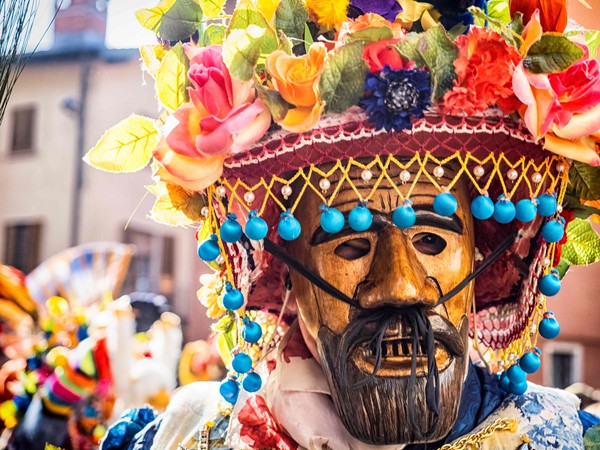
Even though “Bei” and “Brut” are unable to speak, they identified by the crowd because they run with bells that produce different sounds. The “Bei”, who are tied to life, have bronze bells with argentine sound, which are the ones that the animals had in the pasture, while the “Brut” have bells that make dull and unpleasant sounds.
The Schignano Carnival is a centuries-old tradition that can offer an unforgettable and unique experience to those who choose to participate in the parades. Situated in the Valle D’Intelvi, Schignano can be a delightful destination for a daytrip, with its colors, sounds and flavors.

글 | 미켈라 린다 마그리 Michela Linda Magrì
Director at the Italian Cultural Institute in Seoul
Cultural Attachè of the Embassy of Italy in Korea