

Primitivo di Manduria
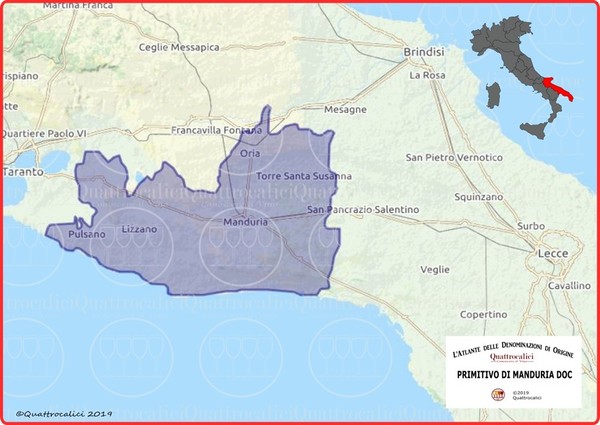
[아츠앤컬쳐] 만두리아는 이탈리아 남부 풀리아 지방의 해안 도시 타란토에서 동쪽으로 약 35km 떨어진 곳에 위치한 마을로, 역사적으로 다소 복잡한 배경을 가진 포도 품종의 본고장이다. 고대 전승에 따르면, 이 포도 품종은 발칸반도 크로아티아와 몬테네그로 일대 출신의 일리리아인들이 풀리아로 가져왔으며, 그들은 포도 재배에 대한 깊은 경험을 가지고 있었다.
기원전 7~6세기경, 그리스인들이 이탈리아 남부를 식민지로 삼기 시작하면서 캄파니아와 루카니아 지역에 알리아니코 품종의 조상격인 포도를 들여왔다. 그러나 이미 일리리아산 우수한 품질의 와인과 경쟁해야 했기 때문에 그리스 포도 품종이 풀리아 지역에서 널리 퍼지지는 못했다.
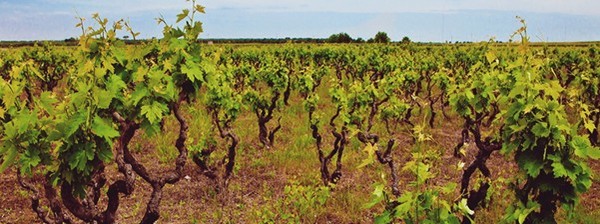
중세에 순례자와 병사들이 십자군 전쟁(11~13세기)을 위해 성지로 떠난 곳이 바로 풀리아였는데, 이탈리아어의 ‘브린디시’라는 단어가 ‘건배’라는 의미로 사용된 유래가 이와 관련이 있다. 십자군들은 성지로 향하기 전, 자신들의 승리와 구원을 기원하며 풀리아의 포도주를 마셨고, 이를 두고 “브린디시에서처럼 마신다”라는 표현이 생겼으며, 이탈리아어로 “fare un brindisi”라고 하였다.
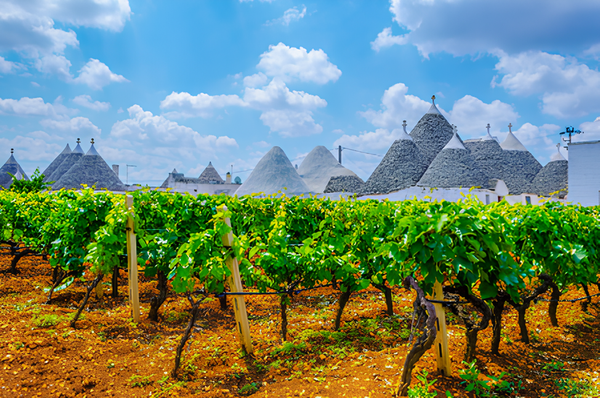
19세기 중반, 풀리아의 조이아 델 콜레 마을에 있는 교회의 신부였던 프란체스코 필리포 인델리카티는 자신의 포도밭에 있는 포도나무 중에서 다른 포도보다 일찍 익으며 진한 맛을 가진 어두운 색 포도를 발견했다. 이러한 이유로 그는 이 포도 품종을 라틴어 ‘Primativus(이른)’에서 유래한 ‘프리미티보(Primitivo)’라고 명명했다.
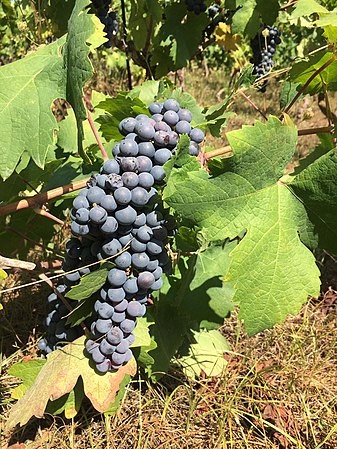
같은 해, 이 포도 품종은 미국에서 발견되었는데, 오스트리아 품종 지어파들러(Zierfandler)와 혼동되어 ‘진판델(Zinfandel)’이라고 불리게 되었다. 진판델은 오랫동안 미국 고유의 품종으로 여겨졌으나, 1960년대 중반 몇몇 미국 교수들이 이탈리아를 방문하여 프리미티보 와인이 진판델을 연상시킨다는 것을 알게 되었다. 와인 학자들의 수십 년간의 연구 끝에, 1990년대 중반 캘리포니아대학교의 포도 유전학자 캐롤 메레디스는 DNA 분석 기법을 통해 프리미티보와 진판델이 크로아티아 달마티아 지역의 크를제낙 카스텔란스키(Crljenak Kaštelanski) 품종과 유전적으로 동일함을 밝혀냈다. 이는 프리미티보-진판델 품종의 기원을 크로아티아로 소급하게 되는 중요한 발견이었다.
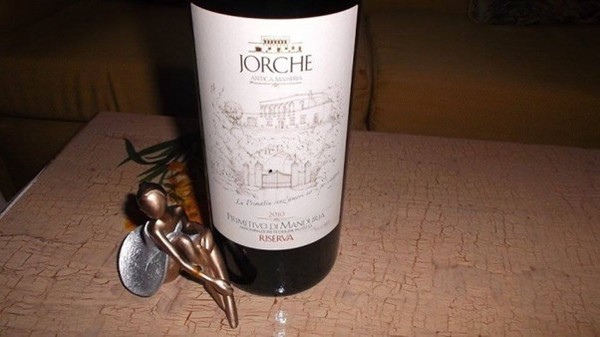
결국 우리는 먼 옛날에 오늘날 크로아티아 고향 땅에서 이탈리아로 포도 품종을 가져온 일리리아인들로 다시 돌아가, 수세기 후 이탈리아어로 프리미티보라고 알려진 포도나무를 소개하게 되는 것이다.
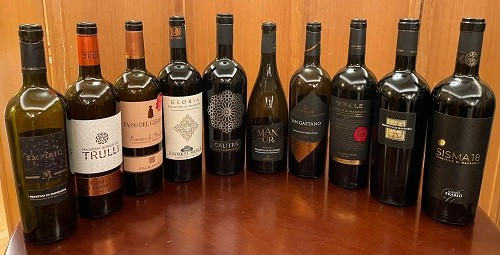
만두리아의 프리미티보 와인은 짙은 루비의 붉은 색을 띠는 와인으로, 숙성하면서 자주색과 가넷색을 띤다. 강렬한 향은 자두, 블랙체리, 블랙베리, 체리, 바이올렛 꽃 향기가 어우러져 있다. 그 맛은 풀바디 드라이 와인 특유의 지속적이고 다소 탄닌감이 있는 동시에 기분이 좋고 조화로우며, 숙성될수록 벨벳화하는 경향이 있다.
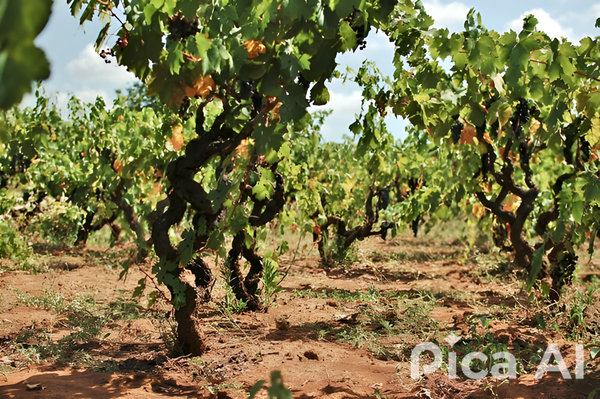
Primitivo di Manduria
Manduria is a town about thirty-five kilometers east of the coastal city of Taranto, in the southern Italian region of Puglia, and it is the Italian home of a grape variety with a somewhat troubled history. According to ancient traditions, it would have been brought to Puglia by the Illyrians, a people from the Balkan peninsula roughly from present-day Croatia and Montenegro who had a deep-rooted experience in viticulture.
In the same period, between the seventh and the sixth century BC, when the Greeks began to colonize southern Italy bringing with them their vines, such as an ancestor of Aglianico grape, to the regions of Campania and Lucania, they did not find much space in Puglia due to the competition from Illyrian wines that were of excellent quality.
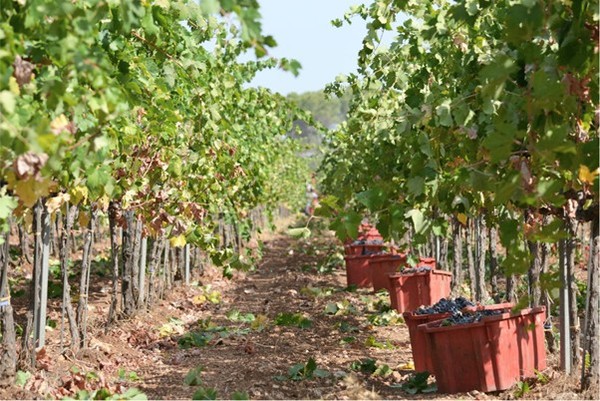
It is right there in Puglia, from where much later pilgrims and soldiers left for the Crusades (XI~XIII centuries AD), that the Italian word “brindisi” seem to have originated with the meaning of auspicious drink. Crusaders, in fact, drank Apulian wines invoking victory and salvation for themselves before going to fight in the Holy Land, and this was said “drink as in the town of Brindisi” and then in Italian “fare un brindisi” (to toast).
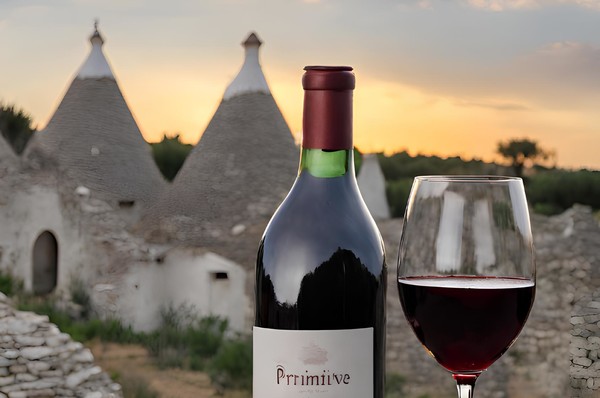
In the mid-nineteenth century, Francesco Filippo Indellicati, a priest of a church in the Apulian town of Gioia del Colle, noticed that among the vines in his vineyards there was one that gave dark, tasty grapes that ripened earlier than the others. For this reason, he called that vine Primitivo (“early” in Italian) from the Latin “Primativus”.
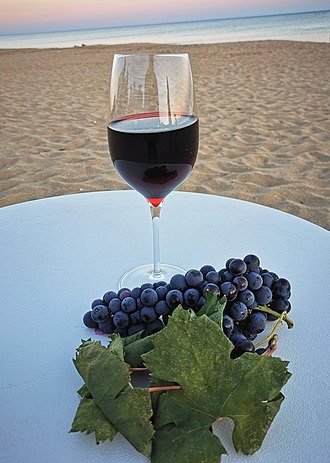
It was in those same years that this vine found its way in the United States where it was called Zinfandel, probably mistaken for Zierfadler, an Austrian vine. Zinfandel was long considered an American vine until mid-1960s, when some American professors visited Italy and noticed how Primitivo wines reminded them of it. After decades of research by wine scholars, in mid-1990s a grape geneticist from University of California, Carol Meredith, using a specific DNA technique showed that both Primitivo and Zinfandel were genetically equivalent to the Croatian Crljenak Kastelansky, a Dalmatian vine that seems to represent the Primitivo-Zinfandel grape in its original home.
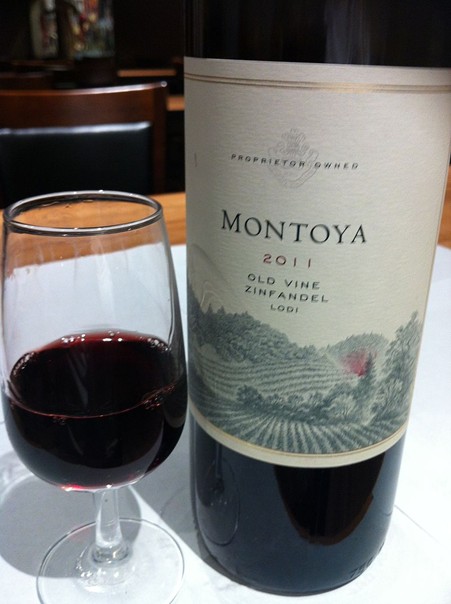
Thus, we return to the Illyrians who in a distant past brought to Italy from their homeland in today’s Croatia a vine known in Italian centuries later as Primitivo.
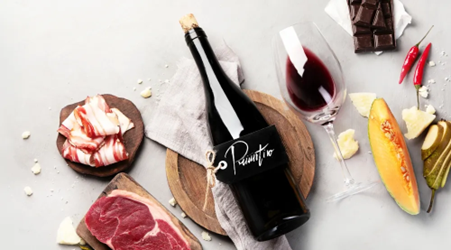
Primitivo di Manduria is a wine with a deep ruby red color tending towards purple and garnet when aging. Its intense aroma includes hints of plums, black cherries, blackberries, cherries and floral notes of violet. The taste is typical of a full-bodied dry wine: persistent, rather tannic but pleasant and harmonious at the same time, tending to velvety when aging.

글 | 에밀리아노 펜니지 Emiliano Pennisi
Lecture of the Italian Cultural Institute in Seoul, Sogang University lecturer of Italian language
Wine scholar and expert
He attended sommellier courses in Italy