

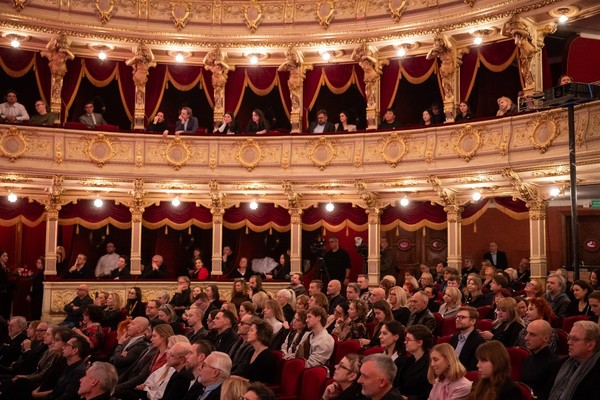
[아츠앤컬쳐] 폴란드에서 가장 오래되고 중요한 드라마 극장 중 하나이자, 고전과 현대 작품을 새롭게 해석하는 것으로 유명한 크라쿠프의 율리우시 스워바츠키 극장은 한강의 『채식주의자』를 폴란드에서 처음 연극으로 선보였다. 이 작품의 초연은 2025년 12월 4일 메인 무대에서 열렸으며, 크라쿠프에서 개최되는 제18회 디바인 코미디 국제 연극제의 개막을 알린 바 있다.
이 공연을 연출한 파베우 미시키에비치는 지적 정교함, 미세한 뉘앙스에 대한 감각, 그리고 혁신적인 무대 언어 사용으로 높이 평가받는 뛰어난 폴란드의 연극·영화 예술가이다. 무대미술과 의상은 바르바라 하니츠카가 디자인했으며, 음악 트리오인 쿠바 노바크, 토멕 프셰타치니크, 라파우 마주르가 타악기, 기타, 거문고로 구성된 오리지널 음악을 연주했다. 이 독특한 공연은 폴란드와 한국 문화의 상징적 만남으로, 한강 작가의 가장 감동적인 소설 중 하나인 『채식주의자』의 세계를 현대 연극의 강렬하고 감각적인 언어로 해석해 폴란드 관객들에게 선보였다.
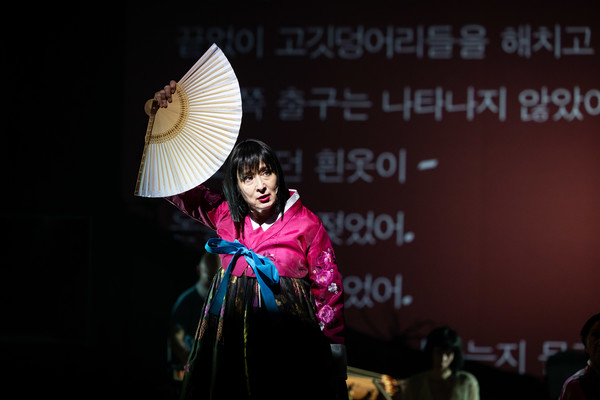
이 공연은 인간이 스스로를 포기하게 만드는 원동력이 무엇인지, 즉 그들의 몸, 언어, 종(種)을 버리게 만드는 힘은 무엇인지 질문하도록 영감을 준다. 사라지고자 하는 욕구는 어디에서 오는가? 단순한 거부의 몸짓이 아니라, 다른 방식으로는 표현될 수 없는 절망의 표현으로서 말이다. 노벨문학상 수상 작가 한강의 『채식주의자』는, 큰 외침이 아닌 침묵과 모호함 속에서 전개되는 한 여성의 반란을 그린다. 주인공은 사회적·가족적·신체적인 삶에서 점차 물러나며 자신이 인간 종에 속한다는 사실 자체를 철저히 부정하려 한다. 그녀는 나무가 되기를 갈망하는데, 식물이 되려는 그녀의 시도는 폭력, 젠더, 언어, 인간적 욕망에 저항하는 행위가 된다.
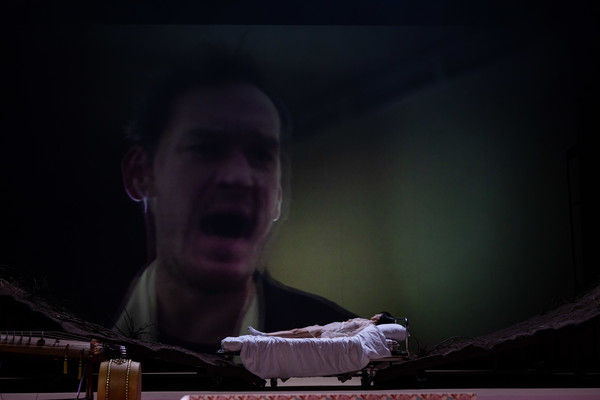
소설의 3부 구조를 따라, 창작자는 움직임, 이미지, 영상 등 다양한 예술적 언어를 활용한다. 주인공이 세계로부터 자신을 더 단절시킬수록 언어 자체가 해체되기 시작한다. 단어는 이미지와 움직임에 길을 내어 준다. 연극 극작가인 요안나 베드나르치크, 화가 크시슈토프 멩지크, 안무가 안나 옵샨스카, 그리고 연기 팀과 함께 파베우 미시키에비치는 근본적 거부에 대한 태도에 접근하고자 한다. 이는 멜빌의 중편에서 서기 바틀비가 “나는 하지 않는 편에 서겠습니다.”라고 말하는 수동적인 거부와는 다르게, 세계의 폭력에 맞서는 능동적인 거부의 몸짓이 된다. 이는 자기 소멸의 대가를 치르게 된다고 하더라도 강압적인 구조에서 벗어나고자 하는 시도이다. 그렇다면 이것은 고요한 형태의 시위인가? ‘사라짐’은 정치적 제스처인가? 자신의 종(種)을 바꾸는 것이 과연 인간 중심주의의 지옥으로부터 벗어나는 길이 될 수 있는가?
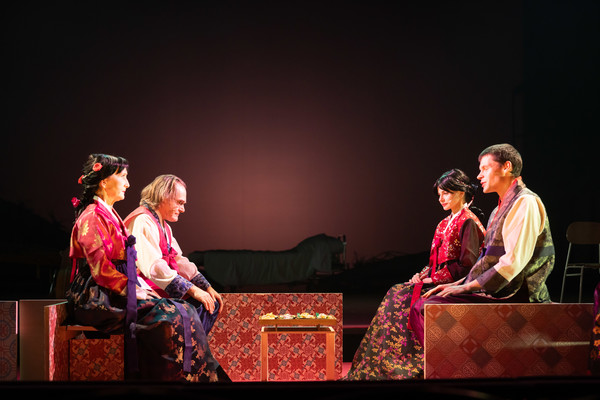
무대 구성원:
연기자들: 도미니카 베드나르치크, 리디아 보가추브나, 올리비아 두르차크, 카롤리나 카존, 나탈리아 스트셸레츠카, 알리나 슈체기엘니아크, 마르친 칼리시, 카롤 쿠바시에비치, 파베우 스마가와, 예지 시비아트원, 아담 비에트신스키, 토마시 비소츠키, 크시슈토프 자제츠키
안무가: 아가 옝제이차크, 마그달레나 말리크, 나탈리아 그리츠카, 마레크 불라
*이 공연은 태준열 주 폴란드 대한민국 대사의 명예 후원으로 개최되었으며, 더 자세한 정보는 www.teatrwkrakowie.pl 에서 확인할 수 있다.
번역: 주한 폴란드 대사관 문화공공외교팀 권하연
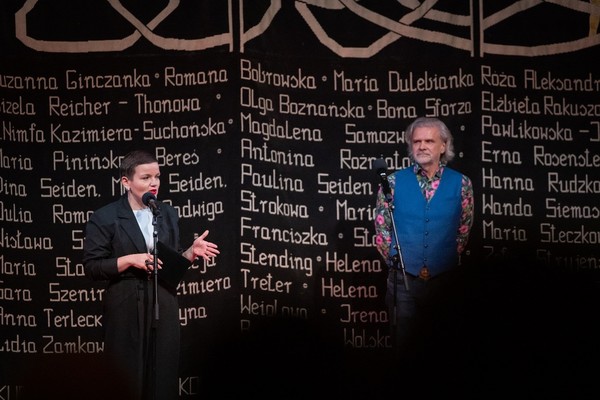
Han Kang's The Vegetarian on the stage of the Słowacki Theatre in Krakow
The Juliusz Słowacki theater in Kraków, one of the most important and oldest Polish dramatic theatres, known for its bold interpretation of Polish and world classics as well as contemporary literature— prepared the first Polish theatrical adaptation of Han Kang’s The Vegetarian. The premiere took place on 4th of December 2025 on the Main Stage, inaugurating the 18th edition of the Divine Comedy International Theatre Festival in Krakow.
The director of the performance, Paweł Miśkiewicz, is an outstanding Polish theatre and film artist, valued for his intellectual precision, sensitivity to nuance, and innovative use of stage language. The scenography and costiums were designed by Barbara Hanicka, and the musical trio Kuba Nowak, Tomek Przetacznik i Rafał Mazur performed the original music for the performance on percussion, guitar and geomungo. This unique event, a symbolic meeting of Polish and Korean cultures, presented to Polish audiences the world of one of Han Kang’s most moving novels, interpreted through the intense, sensual language of contemporary theatre.
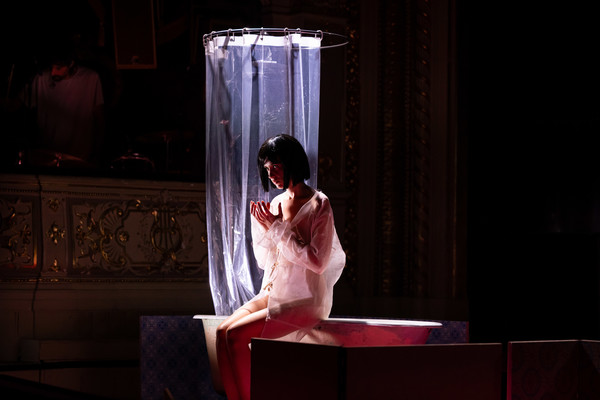
The performance inspires to questions about what drives human to renounce themselves – their bodies, their languages, their species? Where does the need to disappear come from—not only as a gesture of refusal, but also as an expression of despair that finds no other form of expression? The Wegetarian, by Nobel Prize winner Han Kang, tells the story of a woman whose rebellion does not take the form of a loud outcry but unfolds in silence and ambiguity. Withdrawing from social, familial, and bodily life, the main character strives to completely negate her belonging to the human species. She longs to become a tree. Her attempt to transform into a plant becomes an act of resistance against violence, gender, language, and human desire.
Following the novel’s three-part structure, the creators turn to various artistic languages—movement, image, and video. As the protagonist detaches herself further and further from the world, language itself begins to disintegrate. Words give way to images and movement. Together with dramaturg Joanna Bednarczyk, painter Krzysztof Mężyk, choreographer Anna Obszańska, and the acting team, Paweł Miśkiewicz seeks to approach an attitude of radical refusal—a refusal which, unlike the passive “I would prefer not to” of Bartleby the scrivener from Melville’s novella, becomes an active gesture of dissent against the violence of the world. It is an attempt to break free from its oppressive structures—even at the cost of self-annihilation. Is silence a form of protest? Is disappearance a political gesture? Can transforming one’s species become a way out of the hell of anthropocentrism?
On stage:
Actor and actresses: Dominika Bednarczyk, Lidia Bogaczówna, Oliwia Durczak, Karolina Kazoń, Natalia Strzelecka, Alina Szczegielniak, Marcin Kalisz, Karol Kubasiewicz, Paweł Smagała, Jerzy Światłoń, Adam Wietrzyński, Tomasz Wysocki, Krzysztof Zarzecki
and
Dancers: Agata Jędrzejczak, Magdalena Malik, Natalia Gryczka, Marek Bula
The performance is held under the honorary patronage of H.E. Tae Junyoul, Ambassador of the Republic of Korea to Poland. More information at www.teatrwkrakowie.pl
주한폴란드대사관 제공