

Dozza, an open-air museum
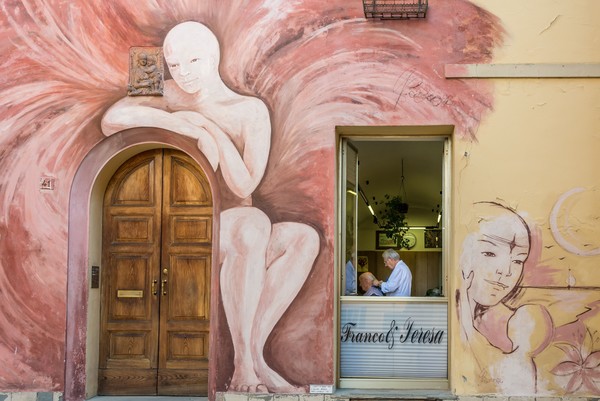
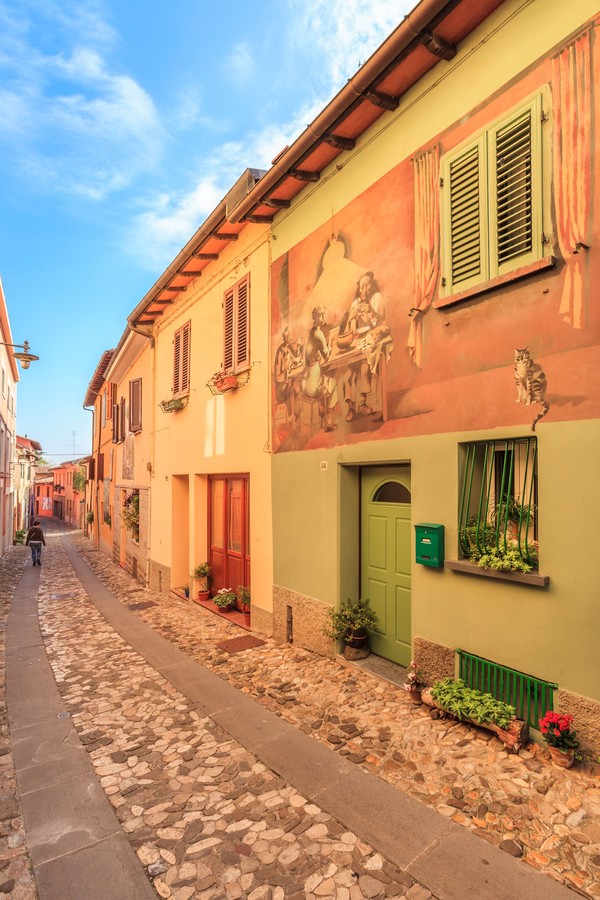
[아츠앤컬쳐] 도짜는 에밀리아-로마냐 주에 위치한 아름다운 중세 마을로, 볼로냐에서 약 35km, 이몰라에서는 불과 몇 킬로미터 거리에 있다. 포도밭과 경작지로 둘러싸인 이 마을은 아펜니노 산맥 자락의 완만한 구릉에 자리 잡고 있다. 작은 마을 도짜에는 아주 독특한 특징이 있는데, 구시가지의 건물들 벽면을 장식하고 있는 다채로운 벽화들이 바로 그것이다. 이 벽화들은 늘 개방되어 무료로 관람할 수 있으며 끊임없이 변화하는 진정한 ‘야외 미술관’이다. 시간이 흐르면서 오래된 작품들은 정성스레 복원되고 새로운 작품들이 더해져, 마을은 고유한 정체성을 유지하면서도 끊임없이 새롭게 변화하고 있다.
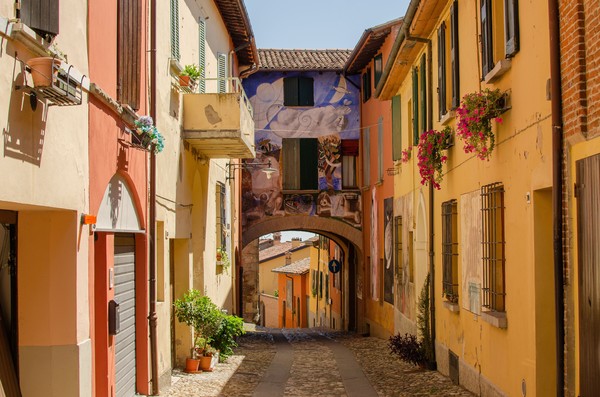
도짜 벽화의 역사는 1960년대 ‘비엔날레 델 무로 디핀토(벽화 비엔날레)’에서 비롯한다. 격년제로, 9월에 열리는 이 행사는 이탈리아는 물론 세계 각지의 현대 미술 작가들이 초청되어 마을의 주택과 건물 외벽에 직접 그림을 그린다. 작품 스타일은 매우 다양해, 어떤 그림은 이야기를 들려주고, 또 어떤 그림은 추상적인 형태와 색채를 탐구한다. 행사가 끝난 뒤 작품들은 그대로 남아 마을 사람들의 일상 속 일부가 된다. 오늘날 도짜 전역에서 100점이 넘는 벽화를 만나볼 수 있으며, 모든 작품에 작가의 이름과 제작 연도가 표기되어 있다. 그림들은 창문 사이, 출입문 주변, 아치 아래 등 곳곳에 자리해, 방문객들의 놀라움과 탄성을 자아낸다.
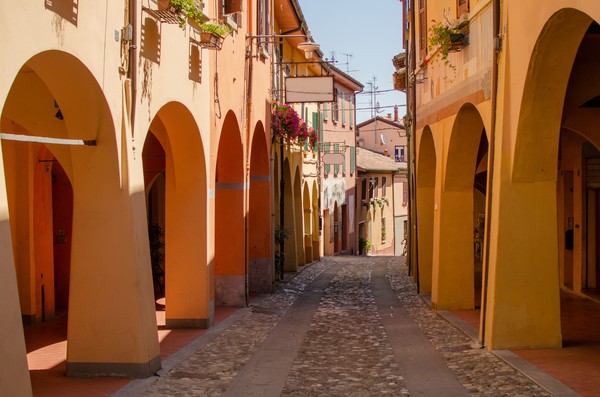
마을의 중심부는 길고 좁은 형태로, 평행선을 달리는 두 거리, ‘비아 벤티 세템브레’와 ‘비아 에드몬도 데 아미치스’로 이루어져 있다. 비아 벤티 세템브레는 아케이드와 중앙 광장, 시청사가 자리한 중심 거리이며, 비아 에드몬도 데 아미치스는 개인 주택들이 줄지어 있는 조용한 골목길이다. 이 두 거리를 천천히, 발길 닿는 대로 거니는 것이야말로 도짜를 제대로 경험할 수 있는 방법이다.
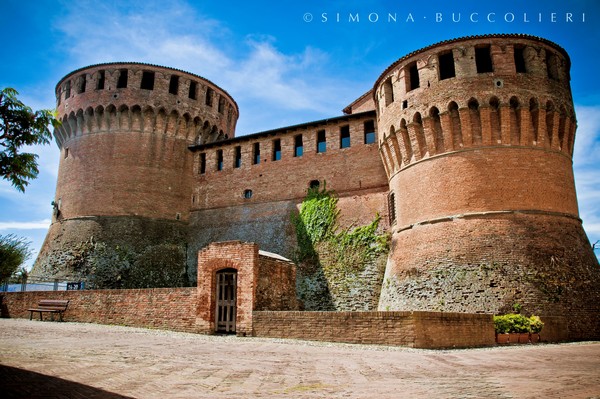
도짜의 매력은 예술에만 국한되지 않는다. 마을을 내려다보는 ‘로카 스포르체스카’는 13세기에 건설된 거대한 중세 요새로 유구한 역사를 간직하고 있으며, 옛 감옥에는 용이 갇혀 있었다는 전설도 전한다. 요새 내부에는 비엔날레와 관련된 스케치와 자료를 전시하는 ‘벽화 연구 및 자료 센터’가 있고, 또한 ‘에밀리아-로마냐 지역 와인 에노테카’에서는 람부르스코, 알바나, 산조베제 등 지역을 대표하는 와인을 시음해 볼 수 있다. 와인 문화와 전통 에밀리아 조리법에 의한 현지 음식 문화는 방문객에게 수공예와 함께 지역 문화 체험을 선사한다.
마을의 구시가지를 둘러본 뒤에는 ‘비아 산타나스타시아’를 따라 걸으면서 푸른 발셀루스트라 계곡의 탁 트인 전망을 감상할 수 있다. ‘예술가의 길’로 알려진 이 산책로 곳곳에는 벽화 예술가들을 소개하는 안내판이 설치되어 있어, 예술과 자연 경관의 교감을 보여준다.
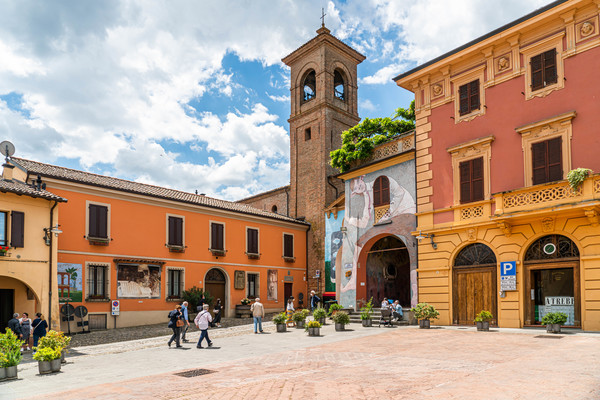
도짜에서 예술은 하나의 행사에 그치는 것이 아니라 마을 공동체가 모두 함께 공유하는 문화적 실천이다. 벽화들은 잘 관리되고, 가이드 투어, 문화 행사, 교육 프로그램 등을 적극적으로 운영한다. 벽화 비엔날레가 열리지 않는 해에도 도짜에서는 판타지 일러스트레이션 비엔날레인 ‘판타스티카’가 열려, 이 기간 동안 마을과 로카 요새는 다시 한번 창작의 무대로 거듭난다.
‘이탈리아에서 가장 아름다운 마을’ 중 하나로 공식 선정된 도짜는 역사와 현대 미술의 독특한 융합과 조화를 잘 보여주며, 전통적인 이탈리아 마을 특유의 분위기 속에서 세월과 함께 끊임없이 성장하고 변화하는 야외 갤러리 같은 곳이다. 도짜는 창의성이 어떻게 문화유산을 되살리고 공동체의 정체성을 강화할 수 있는지를 보여주는 매우 인상적인 사례이며, 방문객들에게는 접근하기 쉽고 몰입감 높은 문화 체험을 선사한다.
번역 감수 ㅣ 이소영
한국외국어대학교 교수
Dozza, an open-air museum
Dozza is a medieval village in Emilia-Romagna, about 35 kilometers from Bologna and just a few kilometers from Imola. Surrounded by vineyards and cultivated fields, it lies on gentle hills at the edge of the Apennines. Small in size, Dozza is well known for a very special feature: the colorful murals painted on the walls of its historic center. These murals have turned Dozza into a true open-air museum that is always accessible, free to visit, and constantly evolving. Over time, older paintings are restored and new works emerge alongside them, allowing the village to renew itself while keeping its identity.
The story of the murals began in the 1960s with the Biennale del Muro Dipinto (Painted Wall Biennial), an art event held every two years in September. During the Biennale, contemporary artists from Italy and around the world are invited to paint directly on the walls of houses and buildings. The walls become large canvases and art takes shape within everyday spaces. The paintings vary greatly in style: some tell stories, while others explore abstract forms and colors. When the event ends, the artworks remain, becoming part of daily village life. Today, more than one hundred murals can be seen throughout Dozza. Each work includes the name of the artist and the year it was created. The paintings appear between windows, around doors and under arches, surprising visitors at every step.
The historic village has a long and narrow shape and develops along two parallel streets: Via XX Settembre and Via Edmondo De Amicis. The former features arcades, the main square and the town hall, while the latter is lined only with private homes. Walking through these streets is the best way to experience Dozza, slowly and without a fixed route.
Dozza is not only about art. The village is dominated by the Rocca Sforzesca, a large medieval fortress dating back to the 13th century that preserves ages of history and even a legendary dragon, said to be kept in its old cells. Inside the Rocca, visitors can also find the Study and Documentation Center of the Painted Wall, which displays sketches and documents related to the Biennale. The Rocca is also home to the Regional Wine Enoteca of Emilia-Romagna, where visitors can discover and taste local wines such as Lambrusco, Albana and Sangiovese. Wine culture is deeply connected to the surrounding landscape of vineyards and local cuisine, rooted in traditional Emilian recipes, plays an equally important role in village life, completing the local cultural experience through food, wine and craftsmanship.
After exploring the historic center, a walk along Via Sant’Anastasia offers panoramic views of the green Valsellustra valley. Known as the “Artists’ Walk,” this path includes information panels dedicated to the artists of the Muro Dipinto and creates a dialogue between art and the natural landscape.
Art in Dozza is not an isolated event but a shared cultural practice. The murals are carefully maintained and the village actively promotes guided walks, cultural events, and educational initiatives. In the years when the mural Biennale does not take place, Dozza remains lively thanks to Fantastika, a biennial illustration event dedicated to fantasy, during which the village and the Rocca once again become spaces for creativity.
Officially listed among I Borghi più belli d’Italia (Italy’s Most Beautiful Villages), Dozza is a unique fusion of history and contemporary art, an open-air gallery that continues to grow and change over time within the atmosphere of a traditional Italian borgo. It stands as a powerful example of how creativity can revitalize heritage and strengthen community identity, offering visitors an immersive and accessible cultural experience.

글 ㅣ 시리아 코미쏘 Siria Comisso
Student at University of Bologna
Intern at the Italian Cultural Institute in Seoul