

Aglianico
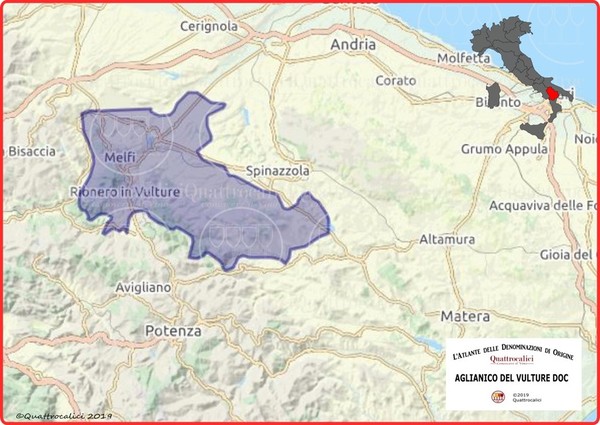
[아츠앤컬쳐] 아펜니노 산맥은 이탈리아 전역을 관통하고 있는데, 이 아름답고 험준한 산맥 남부의 캄파냐와 바실리카타 지역은 적포도 품종 알리아니코의 본고장이기도 하다.
알리아니코는 고대 포도 품종이며, 전통적으로 기원전 7세기에서 6세기 사이에 그리스인들이 이탈리아 반도 남쪽으로 가져왔다고 추정되지만, 다른 그리스 포도 품종과의 관계가 거의 없기 때문에 그 이름의 유래는 오늘날까지도 여전히 불확실하다.
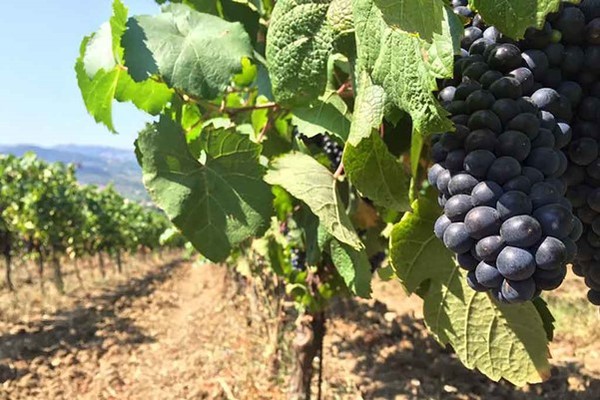
최근 연구에 따르면, 이탈리아 살레르노에서 멀지 않은 곳에 유적이 남아 있는 고대 그리스 마을 엘레아를 연상시키는, “헬레닉”이라고 불렸던 이탈리아 토착 포도 품종일 가능성이 오히려 높다고 한다. 이후 로마인들은 마을 이름을 “벨리아”로, 포도나무 이름을 “비티스 헬레니카”로 바꾸었고, 이곳에서 팔레르노를 포함한 다양한 와인을 생산했다.
이 포도나무의 역사에 대한 문학적 고증 중 하나에 현재 이탈리아 바실리카타 지역의 베노사에서 태어난 로마 시인 퀸투스 호라티우스 플라쿠스(Quintus Horatius Flaccus)의 증언이 있다. 호라티우스는 그의 작품에서 이 대지의 아름다움과 포도주의 우수성을 찬미했다.
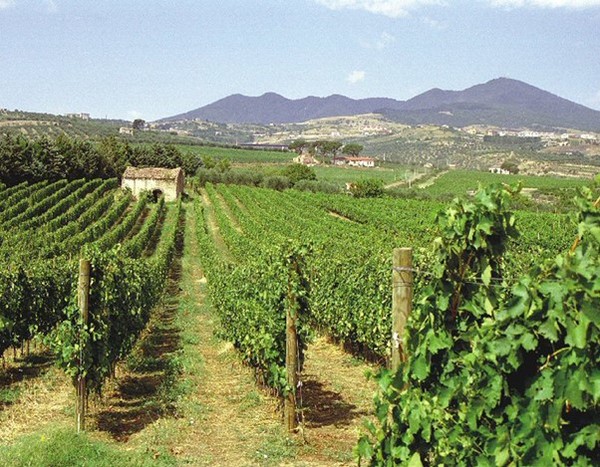
중세에는 프리드리히 2세 호엔슈타우펜 황제와 앙주의 왕 카를루 1세 같은 중요한 통치자들이 이 포도나무 재배를 장려했으며, 이 포도나무로 만든 와인은 그들의 연회에서 항상 빠지지 않았다고 한다.
그 후, 15세기 아라곤 왕국이 이탈리아 남부를 지배하던 시절에 스페인어 발음 규칙으로 인해 포도나무 이름인 “헬레닉”이 “알리아니코”로 발음되기 시작했고 오늘날까지 그렇게 불리게 되었다.
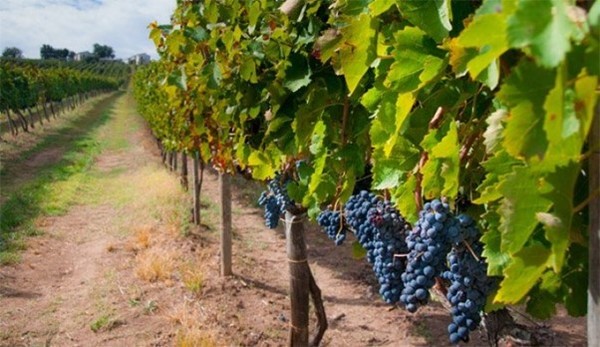
따라서 상충되는 가설이 희박한 역사적 정보와 얽혀 있지만, 시간을 거스르며 숙성될 수 있는 훌륭한 와인이 알리아니코에서 나온다는 것은 확실하며, 여기에서 이 포도로만 생산되는 가장 유명한 세 가지 와인을 소개한다.
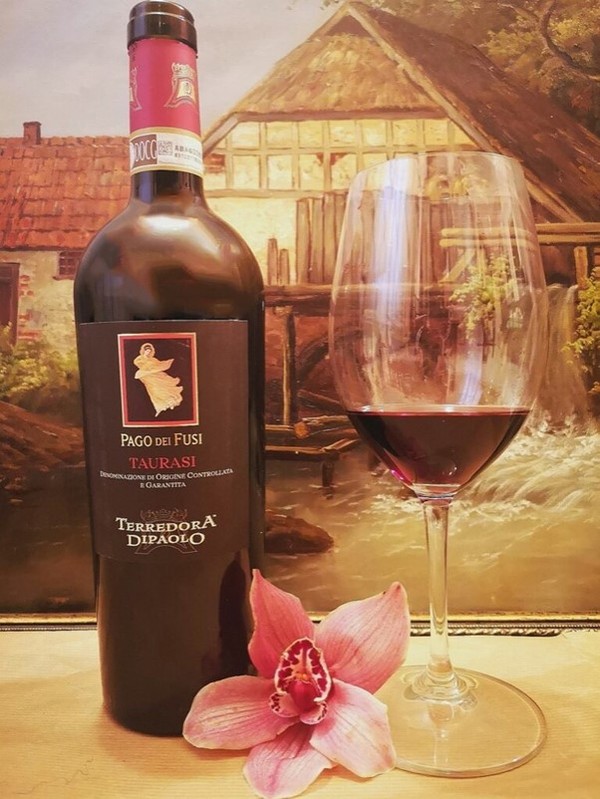
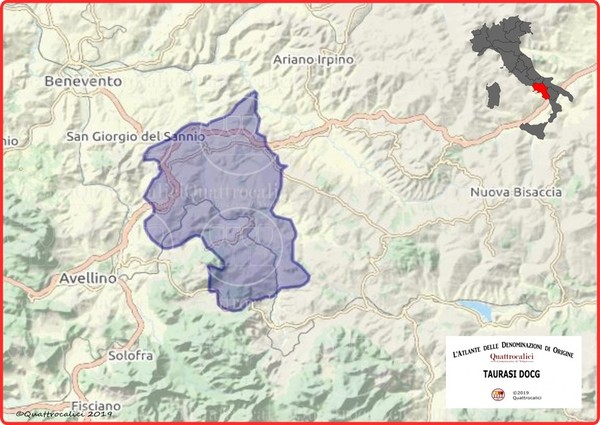
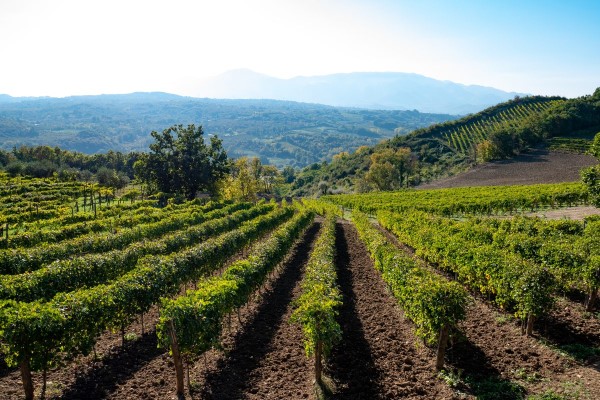
알리아니코 델 불투레는 바실리카타 지역의 주요 도시인 포텐차 북쪽 구릉지에 펼쳐진 포도원에서 나며, 알리아니코 델 타부르노는 캄파니아 지역의 베네벤토 인근 산악 지역에서 생산되고, 알리아니코 디 타우라시는 역시 캄파니아 지역의 아벨리노 주변 구릉지에서 생산된다.
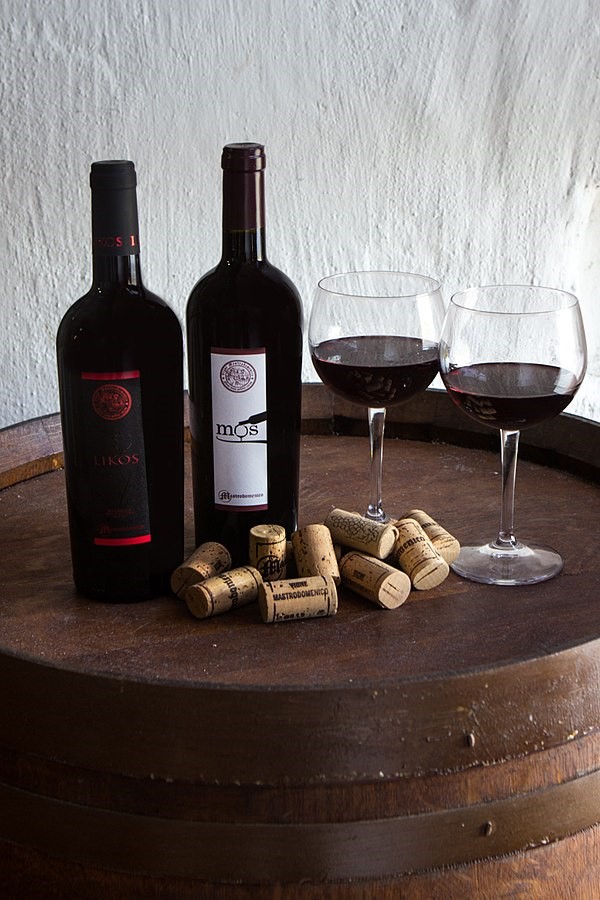
기본적으로 같은 포도나무지만 포도가 각기 다른 지역에서 자라며 고유한 특성을 지니고 있다. 그럼에도 불구하고, 방금 언급한 세 가지 와인에서 몇 가지 유사한 특징을 확인할 수 있는데, 숙성 시 가넷 경향이 있는 강렬한 루비 색상에, 체리, 베리, 바이올렛 꽃 힌트가 가미된 잘 익은 과일의 풍부하고 기분 좋은 아로마와 함께, 시간이 지나면서 벨벳처럼 부드러워지는 지속적인 풍미에 드라이하고 향긋하며 탄닌이 있다.
Aglianico
The Apennine Mountain range extends over much of Italy and in the south of the country these beautiful, rugged mountains are home to Aglianico, a red grape variety that grows mainly in the Italian regions of Campania and Basilicata.
Aglianico is an ancient grape, and it is traditionally believed that the Greeks brought it to the south of the Italian peninsula between the seventh and the sixth century BC, but the origin of its name remains today uncertain as there are only a few relations with other Greek grape varieties.
According to recent studies, it would rather be an indigenous Italian vine that in ancient times may have been called “Hellenic”, harking back to the old Greek town of Elea whose ruins are visible not far from the Italian city of Salerno. Later, the Romans renamed the town as “Velia” and the vine as “Vitis Hellenica” which they used to make various wines including Falerno.
One of the literary testimonies on the history of this vine is that of the Roman poet Quintus Horatius Flaccus who was born in Venosa, a town in the current Italian region of Basilicata: in his works Horatius praised the beauty of his land and the goodness of its wines.
In the Middle Ages, important rulers such as emperor Frederick II Hohenstaufen and king Charles I of Anjou promoted the cultivation of this vine and it is said that the wines made from it were never missing from their banquets.
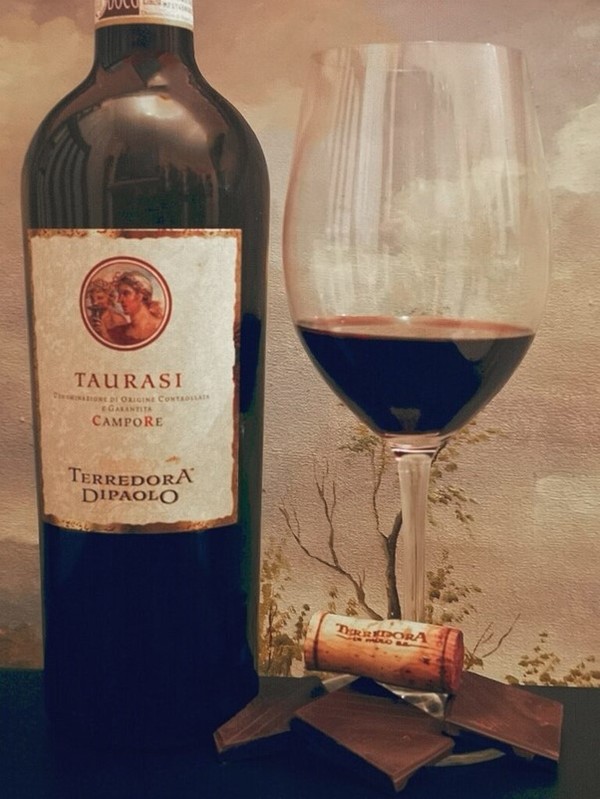
Subsequently, during the Aragonese domination of southern Italy in the fifteenth century, due to the phonetic rules of Spanish language, the vine’s name “Hellenic” began to be pronounced as “Aglianico” and this is how it would be called until today.
Conflicting hypotheses are therefore intertwined with the sparse historical information, but it is certain that great wines capable of aging in defiance of time are obtained from Aglianico, and the three most renowned ones will be mentioned here, all produced almost exclusively with this grape: Aglianico del Vulture, whose vineyards are widespread in the hilly areas north of Potenza, the main city of Basilicata region.
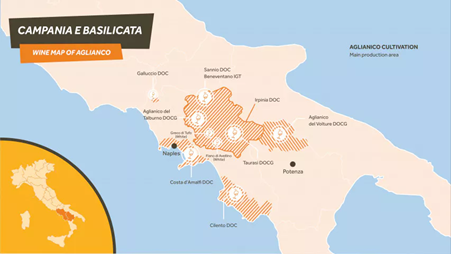
Aglianico del Taburno, produced in the mountainous areas nearby the city of Benevento, in the Campania region and Aglianico di Taurasi, made in the hilly areas around the city of Avellino, also in the Campania region.
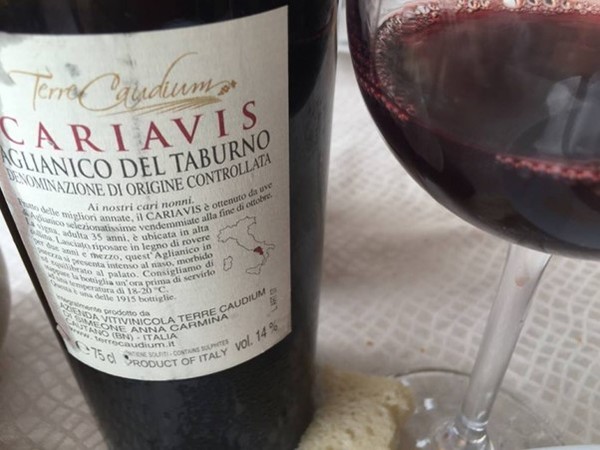
Although it is basically the same vine, its grapes grow in different territories, taking on their own peculiarities. Nonetheless, some similar characteristics are identifiable in these three wines just mentioned: an intense ruby color that tends toward garnet when aging; a full, pleasant aroma of ripe fruit with hints of cherries, berries and violet flowers; a dry, savory, tannic and persistent flavor that becomes velvety over time.

글 | 에밀리아노 펜니지 Emiliano Pennisi
Lecture of the Italian Cultural Institute in Seoul, Sogang University lecturer of Italian language
Wine scholar and expert
He attended sommellier courses in Italy